
There are a million reasons why marriages fail. In addition, failed matrimonial unions have partners accusing each other of causing the breakup. Usually, consideration of the fate of children does not bother lovers-turned-enemies at all. Ultimately, innocent children pay the heavy price.
Do you appreciate the value of growing up in a loving family? How much gratitude do your parents deserve if they endured so much to give you protection and a chance to grow up into a responsible person?
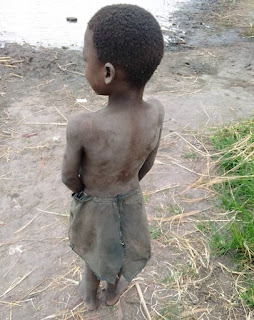
Lunga kid gazing at a doubtful distant future- Pic by LDA
To understand why you must count your blessings if you had that tender, loving care from both parents, think of those whose parents deprived them of that chance. Every normal and responsible person knows that children brought up in broken homes face serious challenges. Usually, they not only miss that vital affectionate care but also many opportunities because of the lack of necessities of life.
But what does it mean to be brought up in a broken home? The truth is, there isn’t one definition. For some, growing up in a broken home means enduring physical or sexual abuse. For others, growing up in a broken home means living in a household that didn’t "look" broken from the outside, but was emotionally painful or neglectful.
Slowed academic development is another common way that parental separation affects children. The emotional stress of a divorce alone can be enough to stunt your child’s academic progress, but the lifestyle changes and instability of a broken family can contribute to poor educational outcomes.
We see children brought up in such homes struggle to make up for lost opportunities in their adult life. Therefore, it is unfair, inconsiderate, and downright irresponsible for anyone in a privileged position to look down on people whose background they little appreciate.
Yes, after the age of 18, one is supposed to design their own life. However, we all know that a firm foundation is necessary for any strong structure. That includes life.
In this article, I will focus on what was cooked in the Bangweulu catchment area’s pot of life, a trend which is still occurring in the Bisa-Unga area. It used to be prevalent in my time as a boy and was one of the causes of ineffable poverty in a number of families. I call it here the hire, sire, fire, and reclaim debacle.
This was a ridiculous practice, condoned in our contemporary society, where a man would enter into a marriage of convenience with a woman when he was ill-prepared. Either he had no intention of marrying, or he needed a woman for economic support. Many a time, such men would rapidly sire a child or two and abandon the family or, better stated, fire his alleged wife on very flimsy misgivings. He would then go for years, becoming incommunicado.
The poor woman would remain with the responsibility of looking after those children without any material, financial, and moral support whatsoever from the so-called father of the children. To survive, and usually out of desperation, the woman would sometimes remarry.
As may be expected, unable to take care of stepchildren, the second man would also abandon the woman; often, he would leave the victim with one more baby. Therefore, the poor mother’s woes of fending for her children kept growing. Both her children and she became vulnerable and miserable.
As if these reckless men’s indecent behaviour was not enough, the first “husband would reappear later and claim that he was still married to the woman. He would concoct some anecdote to the extent that he had just gone to visit, or had been on an impossible mission, and any such stupid story. He would organise his family to terrorise and impeach the offender; find him guilty of adultery, and ask him to pay for marriage interference or something to that effect. Suddenly the neglected woman turns into some kind of commercially valuable stock for the conman. Even where this scammer is lucky and receives damages, locally termed ukuliilapo, he would not share that undeserved fortune with his children.
Sometimes, the “adulterer” would also repeat the circus by charging the third man who married the woman. The community would take a laissez-faire approach in the name of tradition and would look the other way. Meanwhile, the woman had no slight idea that she could seek recourse from the courts.
The climax of this irritating drama comes when the mother, after struggling to bring up these children single-handedly, makes it possible for the kids to become successful in life. Now, the two impostor fathers will vehemently reclaim ‘their’ children. They would declare that these children unquestionably recognise them, because obviously, “the now well-to-do, popular, or famous children are carrying these men’s blood.” In addition, the “blood is thicker than water” anthem becomes more pronounced and would resonate everywhere in the community. As if this mischievous behaviour is not annoying enough, the relationship between these children and their absentee fathers’ relatives is supposed to be cemented, or else!
What imprudence!
Anyway, let me leave judgment to you, the reader, and simply hope this kind of scenario is dead and buried in our rural areas.
Unfortunately, nothing significant happens to encourage behavioural change in these places. It is God’s case.
However, the question is: would children fathered by such men be justly vindicated if they disowned their father? What is your take?
Comments
0 so far
No comments have been posted yet.
Leave a comment
Your comment will appear on the article after you submit it.

Featured title
Isembe Talitwa
An adventure-packed Cibemba thriller for ages 13 and above, prescribed for Zambia's Ordinary Level Literature in Cibemba examinations from 2028 to 2030.