
THE NEW NORMAL AT FUNERALS
Sometime in 2020, I learned a new, currently popular phrase describing the mastery of living in a difficult situation. And it was from the presidential vocabulary. “New normal.” This was meant to encourage citizens to lead a ‘normal’ life during a devastating pandemic known as Covid-19.
I had always thought the acceptable standard was adequately described by the word “normal,” and its opposite as "abnormal" or anomalous. Eish, we learn every day!
This new normal aspect seems to be not only applicable to the pandemic but is also found in other areas of social life around us. I thought of sharing one observation in the way youths behave at funerals. Something I have noticed as another new normal, especially on the Copperbelt.
Having been brought up in a village where a funeral was a solemn occasion, such that everyone was expected to behave in a way that shared sorrow with, and lightened the burden of, the bereaved family, the “new normal” at funerals in towns baffles me.
Of the many funerals I have attended, in the name of celebrating the life of the dead loved one, I have come across what I can simply describe as uncouth, clearly barbaric behaviour, especially among our young people.
Ignore the pomp and showy display of relatives and friends for now!
Recently, I was involved in making sure that funerals of my late relatives were planned and carried out decently by arranging details of what was needed. At one funeral, I was tasked with ensuring that the grave was prepared with the help of some youths. Indeed, they came forth and “volunteered” that they would do the job. Little did we know that they would later give us hidden, new normal conditions.
The first was that they were given Nshima (traditional maize meal porridge) with either meat or chicken. This was to be done as early as 05:00 hours in the morning so they could get to the cemetery in time.
Secondly, I needed to organise transport to drop them off where my relative would be interred. All these seemed normal and straightforward initially. While in my village it would be taboo for gravediggers to ask for a special kind of meal for helping out, I understood that I was not living in my little village surrounded by sympathetic, well-known, and respectful neighbours.
So, I had to liaise with women from the kitchen to ensure that food conditions were met as demanded. What I didn’t ask was the quantity required.
Fast forward, the morning came, and the boys organised themselves in a group of about twenty. Among them, a horde of street kids as young as nine years old. Their ‘supervisor’ indicated they were ready to have their breakfast. I looked at the number of people, and automatically realised we needed more food than budgeted.
They demanded that they group themselves in threes, which translated into six big portions of Nshima with at least two chickens. I explained to them that what they were asking for was just too much food and I would not be able to manage. We were expecting more people to attend the funeral, as it was a burial day. So, we could not afford to give them what they were asking for.
Somehow, we reached a compromise by grouping them in fours and giving them more veggies than chicken. It had never crossed my mind that this action was a grave show of disrespect to them; this would lead to a showdown later.
We later left for the cemetery amid the singing of adulterated gospel songs and drumming by hitting the back of the van. As soon as we reached the cemetery, one young boy, aged around twelve, came forward to tell me that I could not leave them at the graveyard without “water.”
“Water? Why didn’t you guys tell me before we left the funeral house so I could have arranged for water?” I asked the boy, who looked me right in the eyes contemptuously, as if he was examining a minor.
“Father,” he said with a dry smile. “Is this the first time you are playing this role at a funeral?”
“Boy, don’t talk to me like that… I am old enough to be your father,” I said, trying to scare the boy away.
“If you were as old as my father, you could have played this role several times for you to understand that I didn’t even mean mere water. We need beer here! We need to smoke too. This is no child’s play; it’s a difficult and dirty task you ‘hired us’ to do… for you.”
God, did I say anything? Before I muttered anything, the other boy in rags was shouting:
“Baleke bamudala abo boyi, kwati pali akacililo! Bapiina banensu abo!” Leave that old man; his funeral is inconsequential. I think he is just as poor as you and me.”
“No, we cannot do such hard work without him meeting our simple conditions,” said the other in the group.
I had started reversing the van, not very sure whether the job would be done. Then their group leader walked to the car and asked me to leave K100.00 for their Chibuku. For the sake of getting my job done, I obliged. They ululated, chanted, and whistled in celebration. I could hear them shout:
“Asuka azonka Mwabi! Asuka azonka Mwabi!” “The albino has finally contributed,” referring to my light skin. Some shouted that they would show me the real drama after burial, should they find no food specially arranged for them.
Well, you cannot honestly fault them for what they did in terms of preparing the grave. They did the job as expected.
After the burial, back to the funeral house. The chaps piled up their shovels, hoes, and picks in a hurry and rushed to the kitchen to collect the food before other mourners arrived. Women had a tough time keeping them from getting whatever they could find. And, as soon as they had eaten, they left, cursing.
As if that was not enough, another group arrived from nowhere, claiming they were the group that dug the grave. It took a group of men to chase away this second group of impostors.
What a way to mourn! The ‘New normal’ of mourning our late loved ones!
This article was first published in the Saturday Times of Zambia on 22 May 2021
Comments
0 so far
No comments have been posted yet.
Leave a comment
Your comment will appear on the article after you submit it.
Featured title
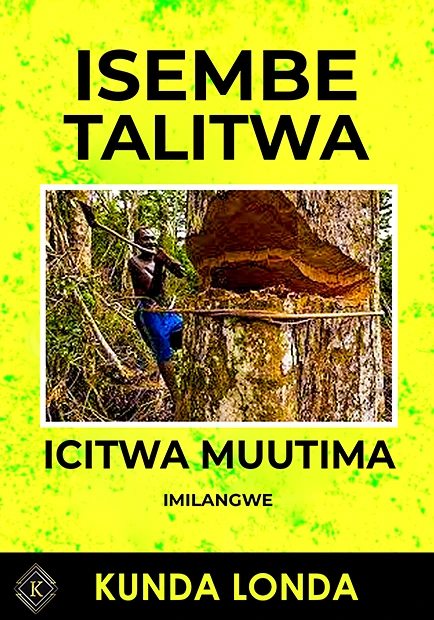
Isembe Talitwa
An adventure-packed Cibemba thriller for ages 13 and above, prescribed for Zambia's Ordinary Level Literature in Cibemba examinations from 2028 to 2030.